
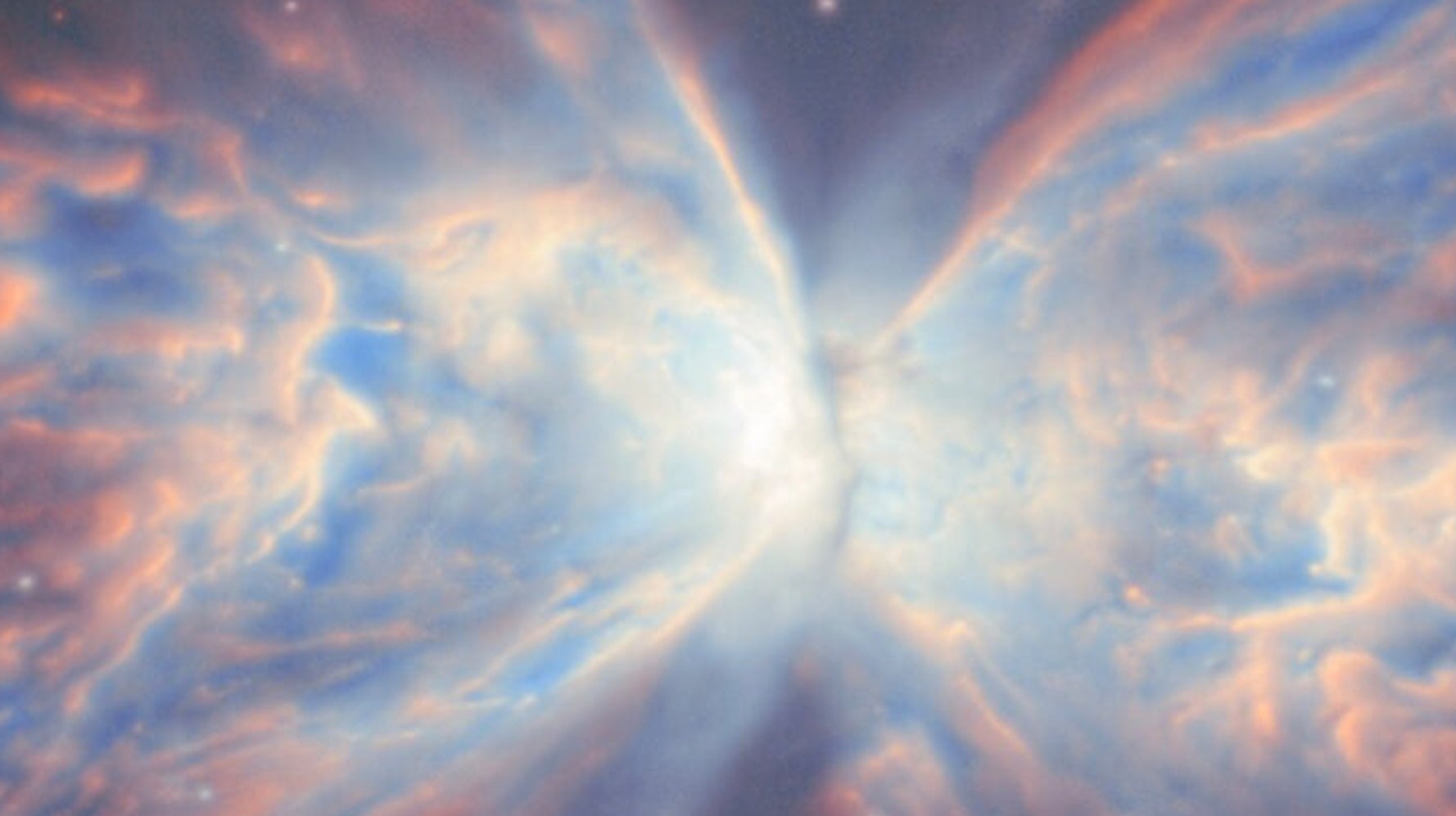
Exploring the Majestic Butterfly Nebula
Deep within the heart of the Scorpius constellation, a mesmerizing scene unfolds, one that mirrors the remarkable transformation of its earthbound counterpart—the butterfly. Known as the Butterfly Nebula, this stellar spectacle stands out as a cosmic testament to the complex beauty of our universe. Nestled between 2,500 and 3,800 light-years from Earth, the Nebula presents a visual feast for astronomers and stargazers alike.
The Discovery and Significance of the Butterfly Nebula
The Butterfly Nebula was first identified due to its unique structure and the striking pattern that resembles the outspread wings of a butterfly. These 'wings' are actually roiling masses of gas thrown out into space by a central star in the late stages of its life. Such stars, known as white dwarfs, shed their outer layers to forge these awe-inspiring nebulae.
Composition and Coloration
One of the most captivating aspects of the Butterfly Nebula is its vivid color palette. The Nebula's brilliant hues—ranging from intense blues to fiery oranges—are primarily a result of the chemical composition of the gases and the intense radiation emitted by the central star. The radiation excites the surrounding gas, causing it to glow in the dark vacuum of space, much like a neon sign.
Scientific and Astronomical Relevance
The study of such nebulae is crucial for astronomers seeking to understand the life cycle of stars. Each stage, from the turbulent birth in stellar nurseries to the splendid demise as evidenced in nebulae like the Butterfly, offers insights into the forces shaping our universe. Hence, capturing and studying images of the Butterfly Nebula not only satiate human curiosity about the cosmos but also equip scientists with vital data to refine their theories of stellar evolution.
Viewing the Butterfly Nebula
For those intrigued by the prospect of observing the Butterfly Nebula firsthand, technology and modern telescopes offer the possibility, albeit at a high magnification. Various observatories and space agencies periodically release images and detailed studies, providing a closer look at this and other distant celestial phenomena.
Conclusion
The Butterfly Nebula remains one of the most picturesque and scientifically valuable celestial bodies in our observed universe. Its distance of thousands of light-years away doesn't diminish its splendor, captured flawlessly in deep space imagery and continuing to inspire both awe and scientific inquiry. As technology advances, the potential for more detailed explorations looms on the horizon, promising even more breathtaking views of such cosmic wonders.